
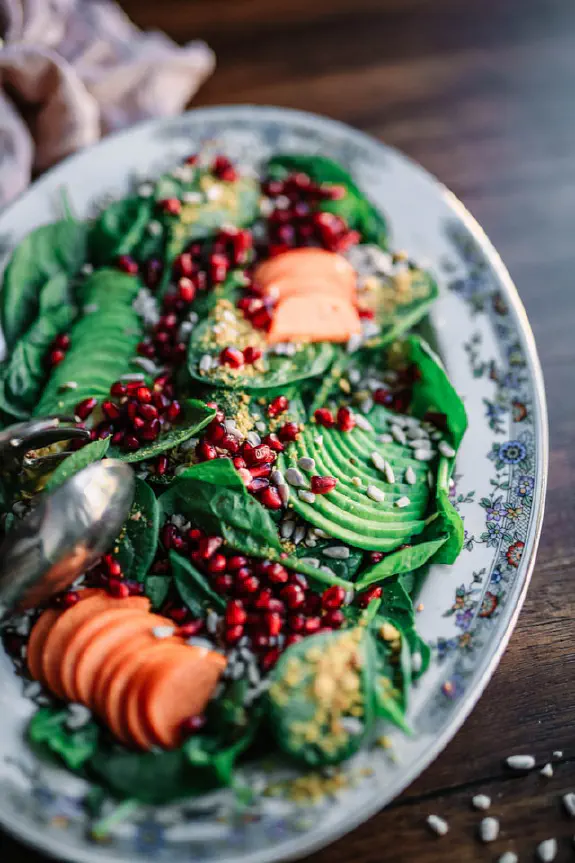
A Christmas table tends to be heavy on roast potatoes, rich sauces and things wrapped in bacon. A bright green salad is the dish that makes all of that feel lighter, and in winter it can be far more interesting than a bowl of limp lettuce. The trick is to build it from leaves and fruit that are genuinely in season now, and to give it enough contrast in colour, texture and flavour that people actually go back for more.
Choose leaves that can stand up to winter
Soft summer lettuces are not at their best in December, and they wilt quickly once dressed. Winter salads work better with leaves that have a bit of body.
- Baby spinach: mild, tender and easy to eat raw. It is a good base for guests who are not keen on bitter flavours.
- Kale and cavolo nero: too tough to eat raw as they are, but excellent once finely shredded and massaged. Strip the leaves from the stems, slice them into thin ribbons, add a small pinch of salt and a little oil, then squeeze and rub them with your hands for a minute or two until they darken and soften.
- Radicchio and chicory: crisp and pleasantly bitter, and they look lovely next to red fruit.
- Watercress or rocket: a peppery handful lifts everything else.
A mix of two or three is usually enough. If you have kale left over from the rest of the cooking, our guide to cooking autumn and winter greens such as cavolo nero has ideas for the stems and the rest of the bunch.
Add winter fruit for colour and sweetness
This is where a winter salad starts to look festive. Two fruits do most of the work.
Pomegranate is an autumn and winter fruit, and its seeds bring both colour and little bursts of sharp juice. Choose one that feels heavy for its size and has no soft spots. To get the seeds out without staining the kitchen:
- Cut a cross about 2 to 3 cm deep into the crown of the fruit.
- Hold it over a bowl of cold water and break it into quarters.
- Working under the water, push the skin back and ease the seeds out with your fingers. They sink, while the white pith floats.
- Skim off the pith, then drain the seeds in a sieve.
The seeds keep for several days in an airtight container in the fridge, so this is a job you can do well before the big day.
Persimmon, sometimes sold as sharon fruit or kaki, is in season from October to January. A ripe one should give a little when you squeeze it gently, like a ripe apricot. If it is still firm and leaves your mouth feeling dry, it needs more time; putting it in a paper bag with an apple speeds things up. Everything except the stalk is edible, skin included, and there are no pips to deal with. Slice it into thin wedges for the salad.
Other good options are segments of orange or clementine, thin slices of crisp pear, or a few dried cranberries if you want something sweeter.
Something creamy, something crunchy
A salad with only leaves and fruit can feel thin next to a roast. Add one creamy element and one crunchy one.
For creaminess, avocado is the obvious choice and works beautifully with pomegranate. Slice it at the last minute and squeeze a little lemon juice over it to slow the browning. Our article on cooking with avocados has more ways to use any that are left. Crumbled goat’s cheese, feta or a little blue cheese are good alternatives, and blue cheese is a classic partner for persimmon and bitter leaves.
For crunch, toast a handful of seeds or nuts in a dry frying pan over a medium heat for a few minutes, shaking the pan often, until they smell nutty and turn lightly golden. Sunflower and pumpkin seeds are cheap and work well; toasted walnuts or hazelnuts feel a little more special. Let them cool before they go anywhere near the leaves.
A simple dressing that does not drown it
Winter salads need a dressing with some acidity to cut through the richness of everything else on the plate. A classic vinaigrette is roughly three parts oil to one part vinegar or citrus juice. For a festive version:
- 3 tablespoons extra virgin olive oil
- 1 tablespoon fruit vinegar or lemon juice
- 1 teaspoon Dijon mustard
- a small drizzle of honey or maple syrup
- salt and black pepper
Shake everything in a jam jar until it thickens slightly, taste and adjust. A raspberry vinegar gives a fruity sharpness that suits pomegranate and persimmon particularly well. If you use a few spoonfuls of the pomegranate juice that collects in the bowl, you can reduce the vinegar a little.
Dress the salad just before it goes to the table. Spinach and rocket collapse within minutes of meeting the dressing, while massaged kale can be dressed up to an hour ahead and will only improve.
Putting it together on the day
The easiest way to keep the salad fresh on a busy cooking day is to prepare the parts separately:
- The day before: deseed the pomegranate, toast the seeds and keep them in a sealed jar, make the dressing and keep it in the fridge.
- In the morning: wash and dry the leaves thoroughly and store them in the fridge in a container lined with kitchen paper. Shred and massage any kale.
- Just before serving: slice the avocado and persimmon, arrange the leaves on a large platter, scatter over the fruit and the creamy element, then add the dressing and finish with the toasted seeds.
A wide, flat platter shows the colours far better than a deep bowl, where all the fruit sinks to the bottom. Keep the salad cool until it is served, especially if it includes cheese, and put any leftovers back in the fridge promptly.
A note on leafy greens and health
Dark leafy greens are a welcome part of a varied diet, and a salad like this adds colour to a meal that can otherwise be quite beige. It is not a health treatment in itself, though. If you take blood thinning medication such as warfarin, the NHS advises talking to your doctor before making big changes to your diet, because foods high in vitamin K, such as spinach and other leafy greens, can affect how warfarin works. You can usually still eat them; your warfarin clinic can tell you how.
Write the salad on your Christmas shopping list now, with the pomegranate and persimmon as the two items to look for, and do a trial run one evening this week. It takes about fifteen minutes, and you will know exactly how much to make for the day itself.